
US Travel Update: New $250 ‘Visa Integrity Fee’ and Financial Bonds Implemented for 2026

By Business Traveler Editorial Team | Published: February 6, 2026
WASHINGTON D.C. – As the United States prepares to host a record-breaking number of international visitors for the 2026 FIFA World Cup, the Department of State has introduced significant new financial and administrative requirements for visa applicants. Reported by Business Traveler, these changes aim to fund enhanced security vetting and ensure travelers comply with their stay limits.
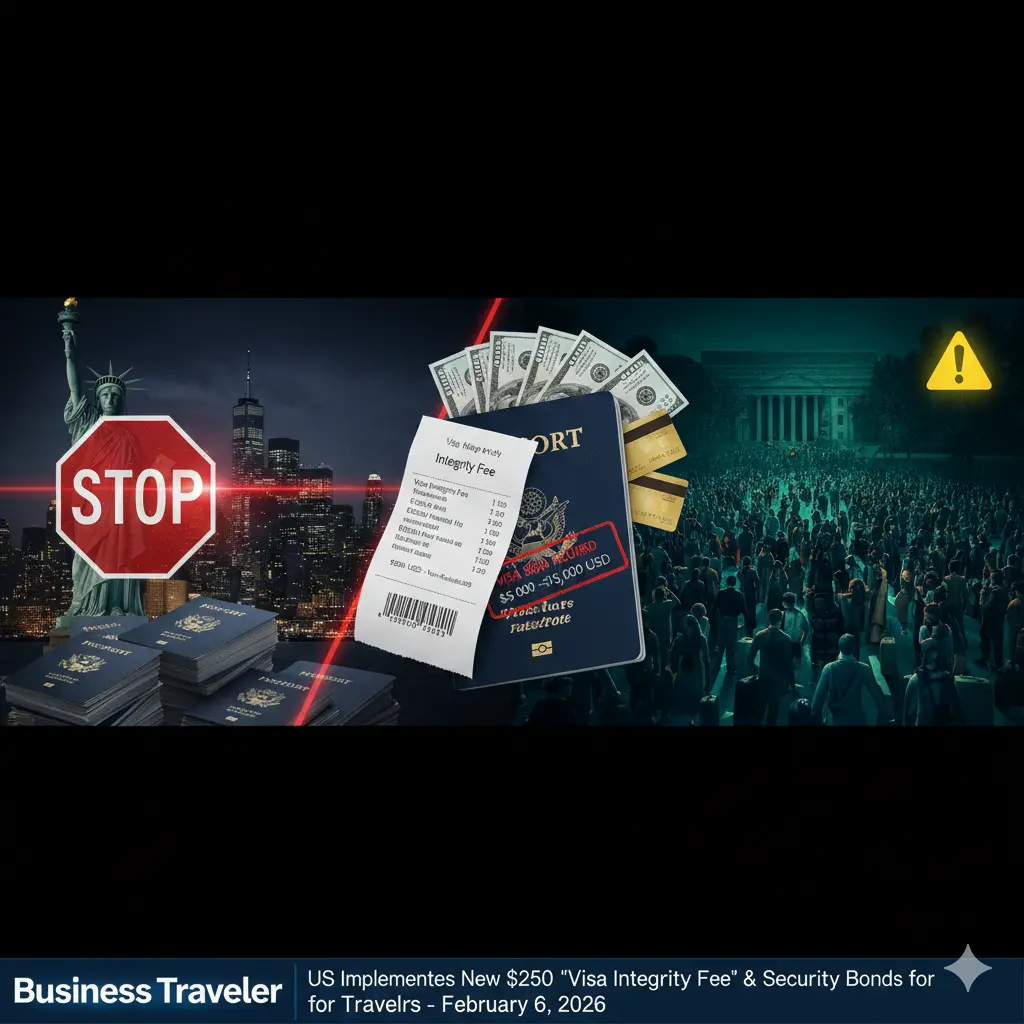
The New ‘Visa Integrity Fee’
Effective immediately, a mandatory $250 Visa Integrity Fee has been added to the base cost of all non-immigrant visa applications (B1/B2, F, M, and J categories). This fee is in addition to the standard Machine Readable Visa (MRV) fee, making the U.S. visa one of the most expensive in the world.
- Purpose: The revenue generated is earmarked for “modernizing consular vetting systems” and expanding social media history reviews for applicants.
- Non-Refundable: Like previous fees, this $250 charge is non-refundable, regardless of whether the visa is approved or denied.
Introduction of the ‘Visa Bond’ Pilot Program
In a more controversial move, certain travelers from “high-risk” countries may now be required to post a refundable security bond as a condition of their visa issuance.
- Bond Amounts: Depending on the risk profile, bonds can range from $5,000 to $15,000.
- Refund Policy: The amount is held in a government trust and is fully refunded once the traveler provides proof of timely departure from the United States.
- Who is affected: While not universal, the bond is frequently requested for applicants from nations with high overstay rates, even if they are visiting for major events like the World Cup.
Mandatory In-Person Interviews for All Ages
Reversing previous policies that allowed children under 14 and seniors over 79 to skip the interview, the U.S. has now mandated in-person appearances for nearly all applicants. This policy shift is designed to collect fresh biometric data and conduct more thorough security screenings, though it has contributed to the 14-month wait times currently seen in hubs like Abu Dhabi.
Social Media Vetting
Travelers should also be prepared for a deeper dive into their digital lives. New requirements now include providing five years of social media handles and history. Customs and Border Protection (CBP) has also proposed that these digital footprints be verified at ports of entry to ensure consistency with the visa application.
Sources:
- Business Traveler News & Analysis (February 2026)
- U.S. Department of State Consular Fee Schedule Update
- Deloitte Insights: 2026 Travel Industry Outlook