
Navigating the 2026 U.S. Visa Landscape: What No One Tells You About the ‘Integrity Vetting’

By Sarah J. Miller | Global Mobility Expert | Published on Medium: February 6, 2026
If you are planning to travel to the United States in 2026, you’ve likely heard the horror stories: 14-month wait times in Abu Dhabi, the $250 “Integrity Fee,” and the mysterious “Visa Bonds.” But beyond the headlines, there is a fundamental shift in how visas are being approved.
As an immigration strategist, I’ve spent the last month deconstructing the new “Integrity Vetting” protocols. Here is what every traveler and expat needs to know before they hit “submit” on their DS-160.
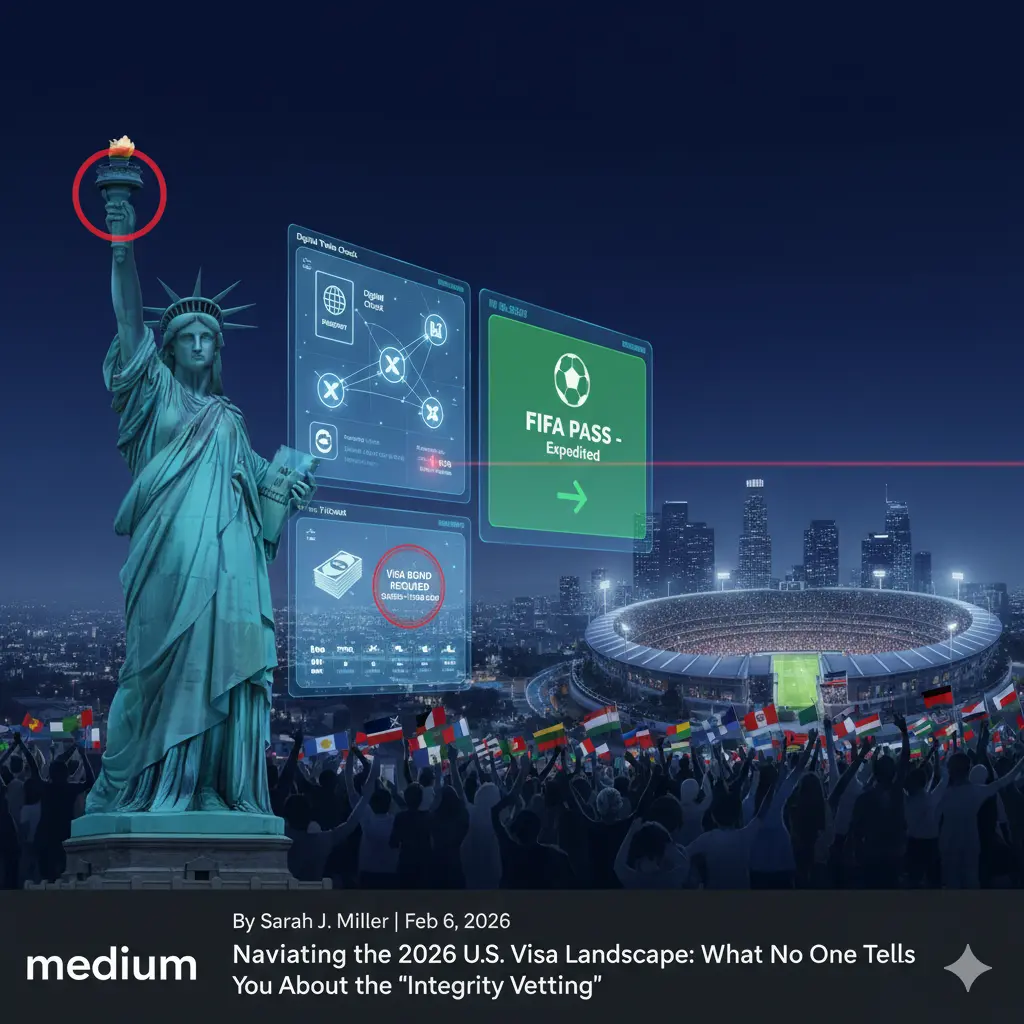
1. The ‘Digital Twin’ Check
In 2026, the U.S. State Department isn’t just looking at your bank statements; they are looking at your digital footprint. The new AI-driven vetting system compares your application data against five years of social media activity.
- The Tip: Consistency is key. If your LinkedIn says you are a CEO, but your visa application lists you as a “consultant” to lower tax profiles, the system will flag a mismatch instantly.
2. Why the ‘Visa Bond’ is Actually a Tool
While the $5,000–$15,000 security bond sounds like a penalty, for many “high-risk” applicants, it’s actually a blessing. Previously, these individuals would have faced an outright rejection under Section 214(b) (lack of ties).
- The Reality: The bond provides a financial guarantee that “buys” the officer’s trust. It’s a collateralized path to an approval that was previously impossible.
3. The World Cup ‘FIFA PASS’ Loophole
The 2026 World Cup has created a massive backlog, but it also created the FIFA PASS. If you can prove you have a match ticket, you can jump the queue. However, be warned: the embassy is watching for “ticket scalping” profiles—people who buy cheap group-stage tickets just to get a visa appointment.
4. The Hidden Costs
Between the $250 Integrity Fee, the MRV fee, and potential bonds, a family of four could easily spend $2,000 to $20,000 before even booking a flight. In 2026, a U.S. visa is no longer just a travel document; it’s a significant capital investment.
Final Thoughts
The 2026 U.S. visa process is no longer about just filling out forms; it’s about data integrity. If you are honest, prepared, and financially ready for the new fees, the “American Dream” is still accessible—it just costs a bit more and takes a lot longer.